

About the Ebola disease
Overview
Ebola disease (EBOD) is a rare but severe illness in humans. It is often fatal.
Ebola disease is caused by viruses that belong to the Orthoebolavirus genus of the filoviridae family (2). Six species of Orthoebolaviruses have been identified to date, with three known to cause large outbreaks:
- Ebola virus (EBOV) causing Ebola virus disease (EVD)
- Sudan virus (SUDV) causing Sudan virus disease (SVD)
- Bundibugyo virus (BDBV) causing Bundibugyo virus disease (BVD).
While there are licensed vaccines and therapeutics for Ebola virus disease, there is no approved vaccine or treatment for other Ebola diseases, such as SVD or BVD.
Early intensive supportive care including rehydration and treatment of specific symptoms, can improve survival. Seeking early care can be lifesaving.

?UNICEF Uganda
Symptoms
The incubation period or interval from infection to onset of symptoms varies from 2 to 21 days.
The symptoms of Ebola disease can be sudden and include:
- fever,
- fatigue,
- malaise,
- muscle pain,
- headache and
- sore throat.
These are followed by:
- vomiting,
- diarrhoea,
- abdominal pain rash,
- and symptoms of impaired kidney and liver functions.
It is important for health and care workers to be on the lookout for these symptoms.
Despite a perception that bleeding is a common symptom, this is less frequent and can occur later in the disease. Some patients may develop internal and external bleeding, including:
- blood in vomit and faeces,
- bleeding from the nose, gums and vagina,
- bleeding at the sites where needles have punctured the skin.
The impact on the central nervous system can result in:
- confusion,
- irritability and
- aggression.
Transmission
The virus can get into the human population when people have close contact with the blood, secretions, organs or other bodily fluids of infected animals such as fruit bats, chimpanzees, gorillas, monkeys, forest antelope or porcupines found ill or dead or in the rainforest.
People can get infected with the virus from another person by direct contact (through broken skin or mucous membranes) with:
- the blood or body fluids of a person who is sick with or has died from Ebola disease; and
- objects or surfaces that have been contaminated with body fluids (like blood, feces, vomit) from a person sick with the disease or who has died from the disease.
People cannot transmit the disease before they have symptoms, and they remain infectious as long as their blood contains the virus.
Health and care workers have frequently been infected while treating patients with Ebola disease. This occurs through close contact with patients when infection control precautions are not strictly practiced.
Burial ceremonies that involve direct contact with the body of a person who has died can also contribute to the transmission of Ebola disease.

?UNICEF Uganda
?UNICEF Uganda

?UNICEF Uganda
Diagnosis
It can be difficult to clinically distinguish Ebola disease from other infectious diseases such as malaria, typhoid fever, shigellosis, meningitis and other viral haemorrhagic fevers because symptoms at early stage of the disease are similar.
Confirmation that the person has an Orthoebolavirus infection is made using the following diagnostic methods:
- reverse transcriptase polymerase chain reaction (RT-PCR) assay,
- antibody-capture enzyme-linked immunosorbent assay (ELISA),
- antigen-capture detection tests, or
- virus isolation by cell culture.
Samples collected from patients are an extreme biohazard risk; laboratory testing on non-inactivated samples should be conducted under maximum biological containment conditions.
Prevention and control
Community engagement is key to successfully controlling any outbreak. Outbreak control relies on using a range of interventions, such as clinical care, surveillance and contact tracing, laboratory services, infection prevention and control in health facilities, safe and dignified burials, vaccination (only for Ebola virus disease) and social mobilization.
Raising awareness of risk factors and protective measures that individuals can take is an effective way to reduce human transmission. Risk reduction messaging should focus on several factors:
- Reduce the risk of wildlife-to-human transmission from contact with infected fruit bats or monkeys/apes and the consumption of their raw meat.
- Reduce the risk of human-to-human transmission arising from direct or close contact with infected people, particularly with their body fluids. Close physical contact with Ebola patients should be avoided. Patients should be isolated in a designated treatment center for early care and to avoid transmission at home.
- Communities should be well informed, both about the disease itself and how to control the outbreak. This is done best when they are involved in the response and there is open discussion.
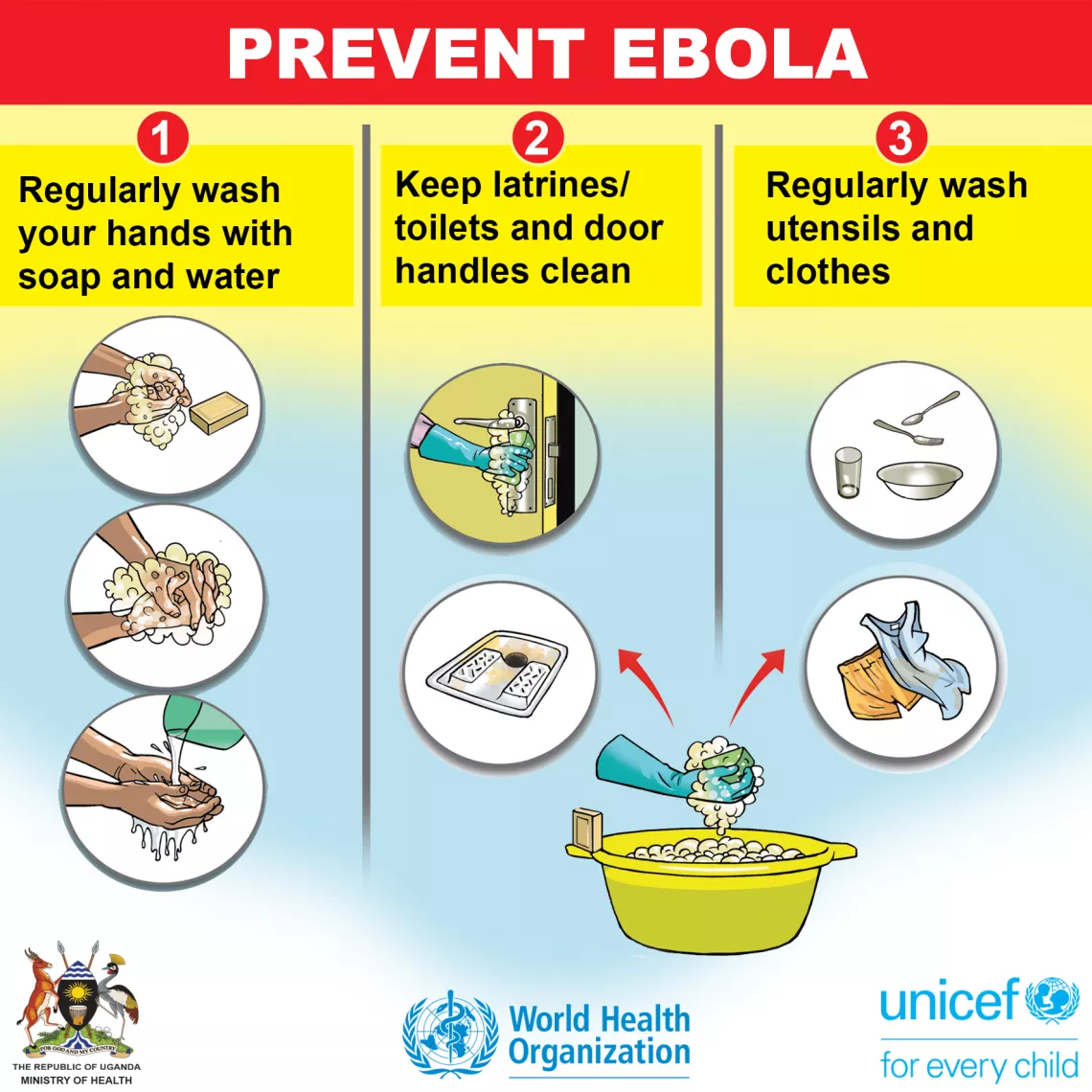
- Outbreak containment measures include safe and dignified burial of the deceased, identifying people who may have been in contact with someone infected with Ebola disease and monitoring their health for 21 days, separating the healthy from the sick to prevent further spread and providing care to confirmed patients. Maintaining good hygiene and a clean environment are also important.